

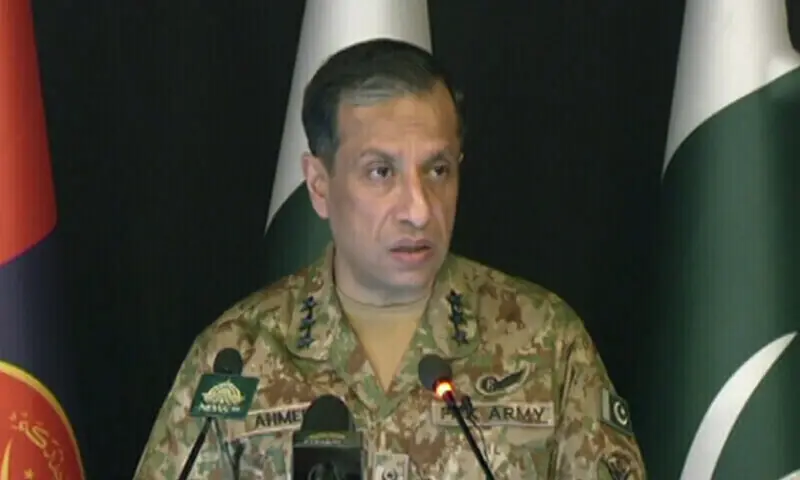
Pakistan’s evolving foreign policy is once again under the spotlight after the Director General of the Inter-Services Public Relations (ISPR), Lt-Gen Ahmed Sharif Chaudhry, clarified Islamabad’s stance on global alignments. In a recent interview with a German magazine, aired on Pakistani television, the DG ISPR stated that Pakistan’s relations with major powers like the United States and China are not defined by an “either-or” choice. Instead, Islamabad seeks balanced, multidimensional ties rooted in national security, economic development, and regional stability.
The statement comes at a time when Pakistan’s geopolitical position is being tested by global power rivalries, regional tensions with India, and internal challenges like terrorism and militancy. By emphasizing “no either-or,” the DG ISPR is signaling that Pakistan will not be forced into binary choices but will pursue a flexible, pragmatic approach.
Reaffirming the US-Pakistan Relationship
One of the strongest themes in the DG ISPR’s remarks was the reaffirmation of Pakistan’s long-standing relationship with the United States. Despite ups and downs in ties over the decades — from Cold War alliances to post-9/11 counterterrorism cooperation — Washington remains an important partner for Islamabad.
Lt-Gen Chaudhry acknowledged that the two countries have managed “convergences and divergences” over time. He praised the US role in mediating a ceasefire between India and Pakistan after a four-day escalation in May 2025. This acknowledgment highlighted Pakistan’s recognition of America’s diplomatic leverage in South Asia.
More importantly, the DG ISPR stressed that Pakistan continues to see “a lot of scope” for collaboration with the US, particularly in counterterrorism. He also welcomed Washington’s designation of the Majeed Brigade — linked to Baloch separatist violence — as a terrorist outfit.
The China Factor: Strategic Trust Beyond Economy
When pressed on whether Pakistan’s ties with the US conflict with its deep partnership with China, the DG ISPR was clear: there is no contradiction. “We have very constructive and strategic relationships with China and other countries,” he said.
China remains Pakistan’s closest strategic ally, from the China-Pakistan Economic Corridor (CPEC) to defense collaboration. But by rejecting the “either-or” framing, Pakistan is attempting to project itself as a state capable of engaging multiple powers at once.
This balancing act reflects Islamabad’s desire to diversify partnerships. While China is critical for economic and defense infrastructure, the US remains vital for diplomacy, technology, and global influence.
Afghanistan and the Legacy of US Weapons
Another sensitive issue raised was the aftermath of America’s withdrawal from Afghanistan. Lt-Gen Chaudhry revealed that US-made weapons left behind during the chaotic exit in 2021 had found their way into the hands of terrorist groups targeting Pakistan. He cited the November 2023 attack on Mianwali Airbase as an example, where weapons traced back to Afghanistan were used.
Quoting the US Special Inspector General for Afghanistan Reconstruction (SIGAR), he highlighted that more than $7.2 billion worth of equipment was left behind. Pakistan has been sharing data on these weapons with Washington, underlining how instability in Afghanistan continues to spill across borders.
India: Ceasefire Without Resolution
On relations with India, the DG ISPR painted a stark picture. While he acknowledged that the May 10 ceasefire reduced immediate firing along the Line of Control, he emphasized that the “conflict endures.”
Pakistan’s military establishment continues to link terrorism inside Pakistan directly to Indian intelligence agencies. Lt-Gen Chaudhry alleged that New Delhi operates from Afghan soil, using groups like the Tehreek-e-Taliban Pakistan (TTP) and the Baloch Liberation Army (BLA) as proxies. He accused India of using “terror as a tool of state.”
Furthermore, the DG ISPR criticized the rise of “Hindutva extremism” in India and reaffirmed Pakistan’s call for international actors — especially the US — to intervene in resolving the Kashmir dispute.
Terrorism and Insurgency: Pakistan’s Narrative
The DG ISPR firmly rejected the notion of “insurgency” inside Pakistan, instead framing violence as purely terrorism. This rhetorical choice is significant: insurgency implies a political movement with grievances, while terrorism is criminal and externally sponsored.
On Balochistan, he downplayed the narrative of widespread unrest, claiming that only a fraction of Baloch live in the province and that many “missing persons” are actually militants or linked to groups like the BLA. He added that there are more missing persons cases in Sindh and Punjab than in Balochistan.
This framing is designed to counter criticism that the Pakistani state is failing to address local grievances. Instead, the military emphasizes that the violence is externally sponsored, primarily by India, and not rooted in legitimate dissent.
Counterterrorism Collaboration with the US
A recurring theme in the DG ISPR’s comments was counterterrorism. Pakistan sees itself as a frontline state against terrorism, suffering immense human and economic losses. By highlighting convergences with the US, such as intelligence sharing and recognition of terrorist outfits, Islamabad is attempting to frame itself as an indispensable partner in global security.
This narrative is aimed at both domestic and international audiences: at home, it reinforces the military’s central role; abroad, it appeals to Washington to maintain close security ties with Pakistan despite its growing relationship with India.
Strategic Messaging: Balancing Act, Not Binary Choices
The phrase “no either-or” is more than a soundbite. It encapsulates Pakistan’s attempt to navigate a multipolar world. In the past, Pakistan was often seen as choosing one camp — the US during the Cold War, China more recently. But the DG ISPR’s message is clear: Islamabad will engage all powers simultaneously, maximizing opportunities and minimizing isolation.
For Pakistan, this balancing act is not only about foreign relations but also about managing domestic stability. By showing ties with both Washington and Beijing, Islamabad hopes to attract investment, secure military support, and counterbalance Indian influence regionally.
Conclusion: A Calibrated Foreign Policy Message
The DG ISPR’s interview highlights a carefully calibrated message: Pakistan refuses to be boxed into exclusive alliances. It values its ties with the United States, cherishes its strategic partnership with China, and seeks to keep doors open with other countries. At the same time, it is vocal about threats from India, terrorism spilling over from Afghanistan, and the need for international intervention on Kashmir.
For Islamabad, the statement serves multiple goals: reassuring Washington of relevance, reaffirming loyalty to Beijing, countering Indian narratives, and projecting confidence at home.
The phrase “no either-or” may ultimately become a defining theme of Pakistan’s foreign policy in the coming years, as the country navigates a turbulent region and a polarized world.