

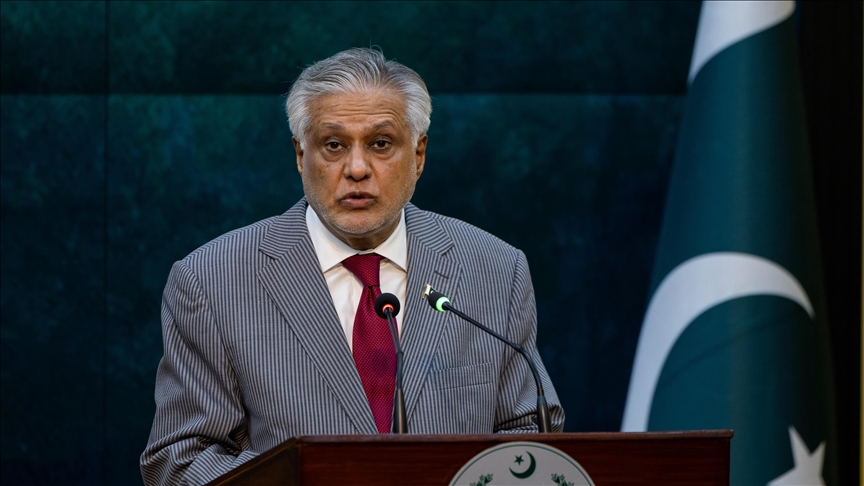
The global stage is once again set in New York as world leaders gather for the 80th Session of the United Nations General Assembly (UNGA), scheduled from September 22 to 26, 2025. Pakistan’s delegation, led by Prime Minister Shehbaz Sharif, has a clear mission: to raise its voice for the resolution of the Palestine and Kashmir disputes, alongside other pressing global issues. On Monday, Deputy Prime Minister and Foreign Minister Ishaq Dar arrived in New York ahead of the session, setting the tone for Pakistan’s active engagement in this high-level forum.
Ishaq Dar’s Arrival in New York
According to the Foreign Office (FO), FM Dar was warmly received by Pakistan’s Permanent Representative to the UN, Ambassador Asim Iftikhar Ahmad, Ambassador to the United States Rizwan Saeed Sheikh, and senior mission officials. His schedule in New York is packed, reflecting Pakistan’s determination to ensure its stance on key issues is heard globally.
The FO confirmed that FM Dar will not only accompany Prime Minister Shehbaz Sharif during multiple engagements but will also attend numerous ministerial and high-level meetings. He is expected to hold over a dozen bilateral meetings with his counterparts, strengthening Pakistan’s diplomatic outreach on the sidelines of the UNGA.
Palestine at the Center of UNGA 80th Session
The Palestine question is once again at the heart of the UN’s agenda. As nearly 150 world leaders convene for the 80th anniversary of the UN, the global forum finds itself overshadowed by wars, humanitarian crises, and protests.
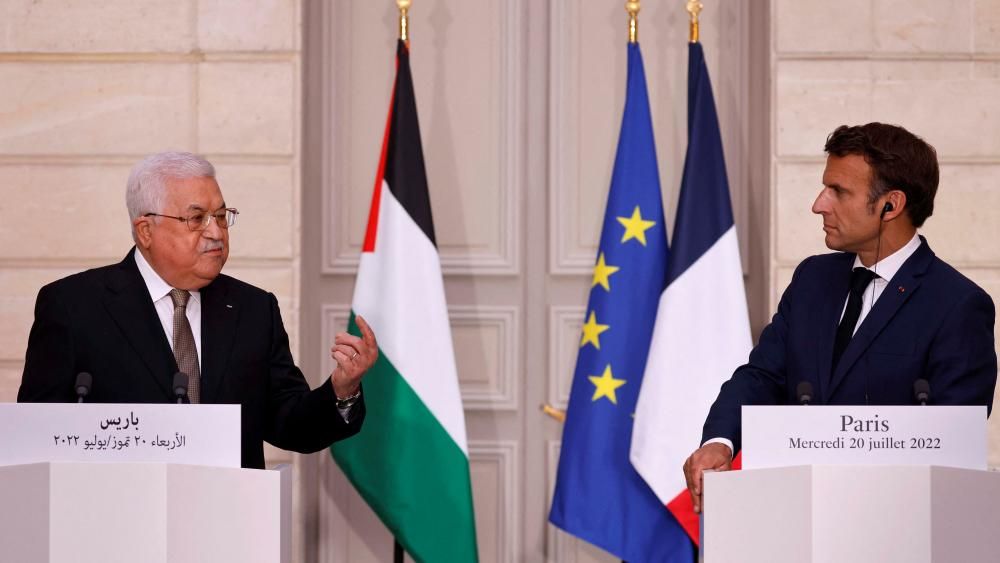
The unresolved issue of Palestine has long tested the UN’s credibility and its ability to deliver peace. This year’s high-level conference on the “Peaceful Settlement of the Question of Palestine and the Implementation of the Two-State Solution”, co-chaired by France and Saudi Arabia, aims to reinvigorate international support for a two-state solution.
In a rare move, the UNGA voted last week to allow Palestinian President Mahmoud Abbas to address the gathering via video link, after the United States denied him and his delegation visas. This symbolic gesture highlights the urgency of the Palestinian issue and the international community’s growing impatience with the prolonged conflict.
Pakistan’s Focus: Palestine and Kashmir
At the 80th UNGA session, Prime Minister Shehbaz Sharif will take the global podium to call for justice in Palestine and Indian-occupied Jammu & Kashmir. According to Radio Pakistan, the Prime Minister’s address will emphasize the right to self-determination for both Palestinians and Kashmiris, urging the international community to end decades of occupation and injustice.
The premier will particularly stress the grave humanitarian crisis in Gaza, appealing for decisive international action to alleviate Palestinian suffering. His speech is expected to reinforce Pakistan’s longstanding stance that both Kashmir and Palestine are not only regional disputes but global moral challenges that demand immediate attention.
Other Key Agendas for Pakistan
Beyond Palestine and Kashmir, PM Shehbaz Sharif will also present Pakistan’s perspective on a range of global issues, including:
- Regional security and stability in South Asia.
- The global fight against terrorism.
- The rising tide of Islamophobia and the need for collective action.
- The challenges of climate change and its disproportionate impact on developing nations.
- Commitments to sustainable development and international cooperation.
Pakistan’s broad-based approach underscores its intention to play a constructive role in shaping global debates, especially those impacting the Muslim world.
A Special Meeting with U.S. Leadership
The Foreign Office also revealed that PM Shehbaz Sharif will join a select group of Muslim leaders in a meeting with U.S. President Donald Trump on the sidelines of the UNGA session. This meeting is expected to provide a platform for exchanging views on regional peace, international security, and the collective concerns of the Muslim world.
Such an interaction reflects Pakistan’s strategy of engaging not only within multilateral forums but also through focused bilateral and multilateral diplomacy, ensuring its voice resonates in Washington as well as at the UN.
Why UNGA 80 Matters for Pakistan
The 80th Session of the UN General Assembly carries symbolic weight as it marks eight decades of the UN’s existence. For Pakistan, this anniversary is not merely ceremonial; it is an opportunity to highlight issues that are central to its foreign policy identity.
Palestine and Kashmir are two unresolved disputes that resonate deeply with Pakistan’s people and leadership. By placing them at the center of its UNGA diplomacy, Islamabad seeks to:
- Build stronger international consensus around the two-state solution for Palestine.
- Remind the world of the unfinished agenda of Kashmir, particularly in the face of human rights violations.
- Assert its role as a responsible voice in the Muslim world, committed to peace, justice, and international law.
Conclusion
As FM Ishaq Dar and PM Shehbaz Sharif engage with the global community at the 80th UNGA session, Pakistan’s message is clear: justice for Palestine and Kashmir is essential for lasting global peace. By combining bilateral meetings, multilateral diplomacy, and principled positions on humanitarian issues, Islamabad aims to ensure that these long-standing disputes are not sidelined amid global crises.
The world will be watching closely as leaders debate Palestine, Gaza, and other conflicts. For Pakistan, the UNGA offers not just a diplomatic platform but a chance to reaffirm its moral commitment to the causes of self-determination, peace, and stability.