

France’s formal recognition of the State of Palestine at the United Nations General Assembly (UNGA) on September 22, 2025, marks a historic shift in international diplomacy. Alongside Monaco, and followed by several European states including Andorra, Belgium, Luxembourg, and San Marino, Paris’ decision reflects a growing global consensus that the Palestinian question can no longer be sidelined. The move was applauded by much of the world, particularly in the Muslim world, as a step towards justice, accountability, and the long-delayed two-state solution.
This recognition, however, comes against a complex backdrop of Israeli occupation, ongoing war in Gaza, and deep political divides in the international system. Analyzing this decision highlights not just France’s role but also the shifting global dynamics that could reshape the future of the Middle East.
Macron’s Announcement: Preserving the Two-State Vision
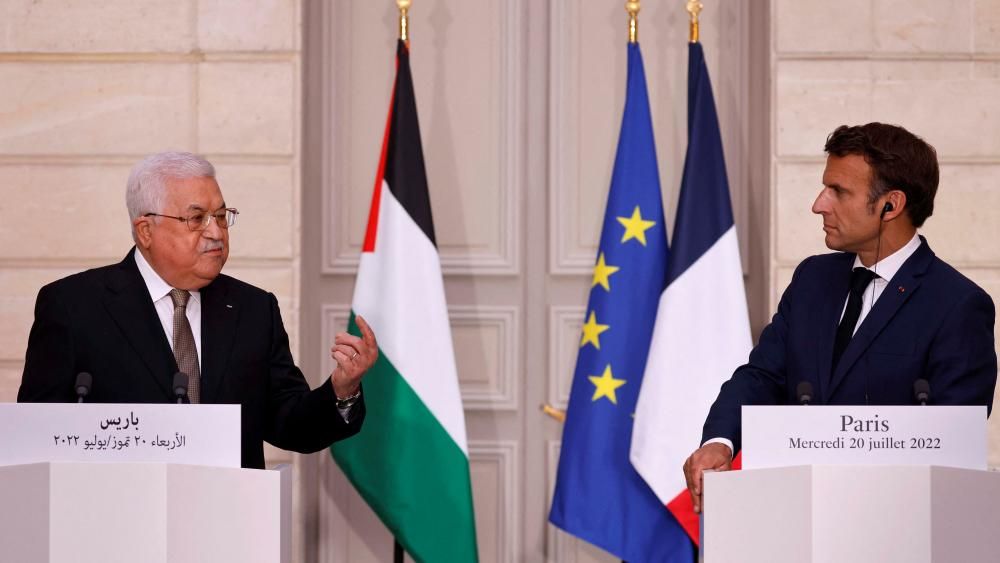
French President Emmanuel Macron addressed the high-level moot by co-organizing the event with Saudi Arabia, reiterating France’s commitment to a two-state solution where Israel and Palestine live “side by side in peace and security.” His announcement of recognition was met with lengthy applause, signaling that France had broken away from decades of hesitation in Western capitals.
Macron also outlined a framework for a “renewed Palestinian Authority,” linking France’s decision to the need for reforms, a permanent ceasefire, and the release of prisoners held in Gaza. This emphasis shows Paris’ attempt to balance symbolic recognition with conditions for long-term stability.
The Eiffel Tower’s illumination with both Palestinian and Israeli flags on the eve of the announcement underlined the symbolic weight of the moment, projecting France as a mediator that supports coexistence rather than polarization.
Momentum in Europe: Beyond France
France’s recognition was not an isolated decision. In recent days, Australia, Britain, Canada, Portugal, and Malta have also recognized Palestine, while the UK went further by allowing the Palestinian Authority to set up an official embassy in London. The flag-raising ceremony at the London mission, led by Husam Zomlot, head of Palestine’s mission to the UK, was a powerful moment in which he called the decision “long overdue” and an “acknowledgement of a historic injustice.”
Britain’s recognition carries particular symbolic weight because of the 1917 Balfour Declaration, which paved the way for the creation of Israel. By shifting its terminology from “Occupied Palestinian Territories” to simply “Palestine,” the UK signaled a diplomatic break from its past.
Such moves show that the Western bloc, long accused of double standards, is now under pressure to adapt its policies in line with international law and the demands of justice.
Pakistan’s Role at the Moot
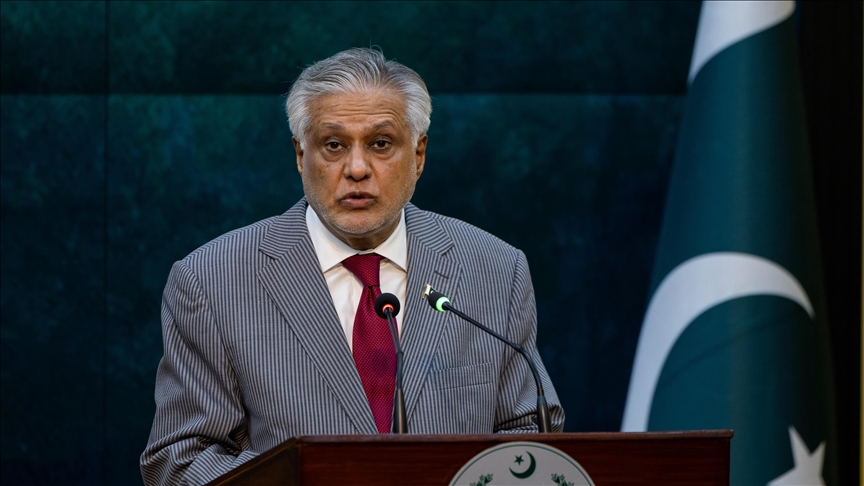
Pakistan, represented by Foreign Minister Ishaq Dar, participated in the moot though Dar did not address the session directly. Pakistan has consistently been among the earliest supporters of Palestine, having recognized its statehood in 1988.
In his remarks on social media, Dar welcomed the recognition announcements and urged all states to follow suit. The Foreign Office reiterated Pakistan’s stance that the Palestinian issue is a matter of justice and international law, not just regional politics.
This position aligns with President Mahmoud Abbas’ video-linked speech in which he urged global recognition and full UN membership for Palestine. Denied a US visa, Abbas nonetheless reaffirmed his government’s commitment to reforms and elections once a ceasefire is achieved.
The US Response and Trump’s Opposition
The recognition wave has not been universally accepted. Former US President Donald Trump, addressing allies in New York, opposed Britain, Canada, and Australia’s decision to recognize Palestine, calling it “a reward to Hamas.” His administration views such moves as symbolic gestures that do not address security concerns in the region.
Trump is scheduled to meet with leaders of eight Muslim-majority states, including Pakistan, Turkiye, Qatar, and Saudi Arabia, to discuss the Gaza war. The White House has indicated that while Trump will outline his “constructive vision” for world order, he remains opposed to formal recognition of Palestine.
This reveals a sharp divide between European states moving toward recognition and the US maintaining its traditional pro-Israel stance.
Symbolism and Justice: Why Recognition Matters
For Palestinians, recognition is not only about diplomacy but also about correcting a century-old injustice. As Husam Zomlot stated in London, recognition represents acknowledgment of the suffering of Palestinians and their right to statehood. At a time when Gaza faces immense destruction and human suffering, global recognition offers symbolic hope and concrete diplomatic leverage.
Recognition also challenges Israel’s narrative that Palestine’s status can only be determined through direct negotiations. By elevating Palestine’s diplomatic position, countries like France and the UK are sending a message that endless negotiations under occupation cannot be the only path.
Challenges Ahead
Despite the optimism, recognition does not translate into immediate peace. Israel has strongly rejected the moves, while the Palestinian Authority itself faces governance and reform challenges. Moreover, recognition without enforcement of international law—ending occupation, halting settlements, and lifting the Gaza blockade—risks remaining symbolic.
Furthermore, divisions within the West—between European recognition and US opposition—create uncertainty about whether recognition will lead to concrete change in UN Security Council resolutions or in Middle East peace talks.
Conclusion: A Shift in Global Diplomacy
France’s recognition of Palestine at the UN General Assembly is a historic milestone that could reshape Middle Eastern diplomacy. By joining a growing bloc of Western and global states, France has not only acknowledged Palestinian statehood but also injected new momentum into the two-state solution.
For Palestinians, it represents overdue justice. For Israel, it signals increasing isolation if it continues its current policies. For the international community, it highlights the urgent need for action rather than rhetoric.
Recognition is not the end of the struggle but the beginning of a new phase where Palestine moves closer to full UN membership and international legitimacy. The world now faces a choice: continue to delay justice or embrace a two-state solution that offers the only viable path to lasting peace.